

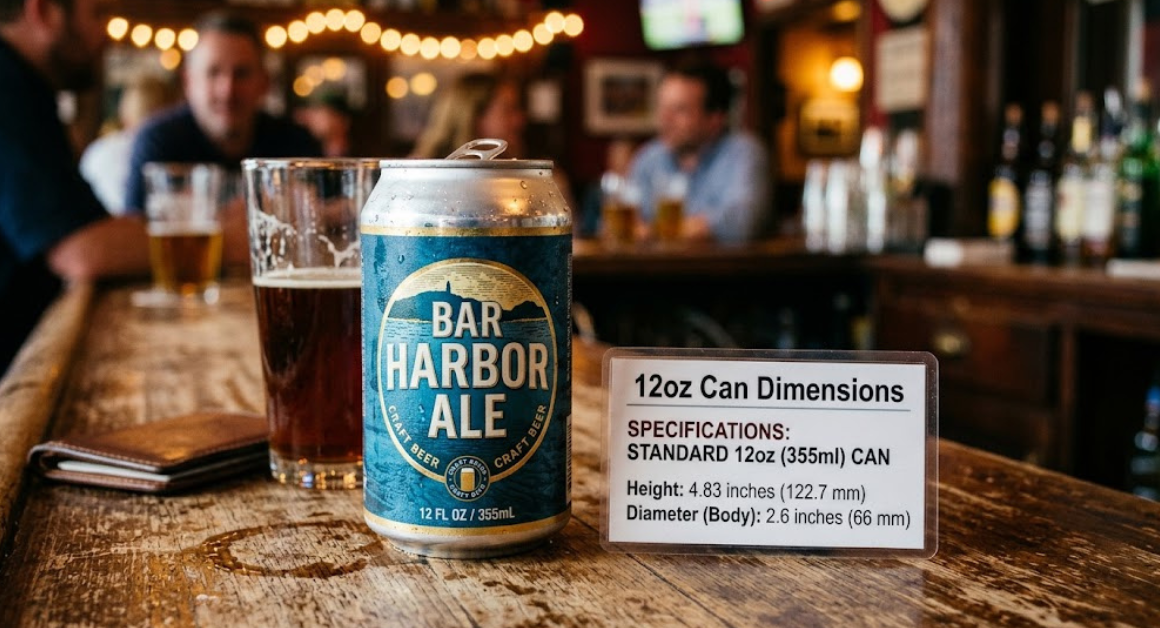
A 12-ounce can may look like a simple cylinder, but its exact size matters more than you might expect. Whether you’re choosing drinks for an event, designing product packaging, organizing refrigerator space, or creating custom labels, understanding 12oz can dimensions helps you make the right decision.
The familiar 12-ounce can is widely used for soda, sparkling water, energy drinks, and beer in the United States. However, not every 12-ounce can has the same shape. Standard cans are relatively short and wide, while slim and sleek versions have a taller, narrower profile despite holding a similar amount of liquid.
In this guide, we’ll cover the standard 12oz can height, diameter, circumference, metric measurements, and the differences between common can styles. You’ll also learn how to measure a can accurately and determine whether it will fit your packaging or storage requirements.
What Are the Standard 12oz Can Dimensions?
A typical US 12-ounce beverage can measures approximately 4.83 inches tall and 2.60 inches in body diameter. These measurements are common for standard aluminum beverage cans, although actual dimensions vary by manufacturer and can design.
Here is a quick reference for the typical dimensions of a standard 12oz can.
| Measurement | Approximate size |
|---|---|
| Can capacity | 12 US fluid ounces |
| Metric capacity | 355 mL |
| Height | 4.83 inches |
| Body diameter | 2.60 inches |
| Body circumference | 8.17 inches |
| Height in centimeters | 12.27 cm |
| Diameter in centimeters | 6.60 cm |
| Diameter in millimeters | 66 mm |
These figures are useful for general planning, but they aren’t universal specifications for every beverage can. The top, bottom, rim, and curved shoulder can have different diameters from the main cylindrical body.
If you’re buying cans for a commercial project, printing labels, or designing a close-fitting holder, confirm the precise dimensions with the can manufacturer.
How Big Is a 12oz Can?
A standard 12oz can is roughly five inches tall and about two and a half inches wide. Its compact, cylindrical shape makes it easy to hold, store in a refrigerator, and pack into cartons.
To visualize the size, imagine a container slightly shorter than a standard 5-inch object, with a diameter similar to a small drinking glass. The actual shape is more cylindrical, with a narrower top and a shaped bottom.
A 12-ounce can holds 12 US fluid ounces, equivalent to approximately 355 milliliters. This measurement describes its liquid capacity, not the amount of space it occupies on a shelf.
12oz Can Dimensions in Inches and Millimeters
When comparing packaging specifications, you may encounter measurements in inches, centimeters, or millimeters. Converting between these units makes it easier to compare products from different suppliers.
| Dimension | Inches | Centimeters | Millimeters |
|---|---|---|---|
| Height | 4.83 | 12.27 | 122.7 |
| Body diameter | 2.60 | 6.60 | 66.0 |
| Body circumference | 8.17 | 20.75 | 207.5 |
The figures above are rounded estimates for a common standard can profile. Different can designs can be slightly taller, shorter, wider, or narrower.
12oz Can Height: How Tall Is a Standard Can?
The height of a typical standard 12-ounce aluminum can is approximately 4.83 inches, or 122.7 millimeters.
This is the overall height from the bottom of the can to the top of its lid. The measurement includes the shaped ends, rather than just the straight cylindrical portion of the body.
Height matters for several everyday applications:
- Refrigerator storage: It helps determine whether cans will fit on a shelf.
- Cup holders: It helps you assess whether a can will sit securely.
- Packaging design: It determines the vertical space needed in a carton or display.
- Product photography: Consistent dimensions help maintain accurate proportions.
- Custom holders: It helps establish the required clearance above the can.
Remember that a standard 12oz can is not necessarily the same height as a 12oz slim or sleek can. Capacity alone does not determine the container’s proportions.
12oz Can Diameter and Circumference
The body diameter of a typical standard 12oz can is around 2.60 inches, or 66 millimeters. However, this measurement refers to the main body, not the narrower top opening or the shaped bottom.
The circumference is the distance around the can’s cylindrical body. For a diameter of 2.60 inches, the circumference is approximately 8.17 inches.
You can calculate it using this formula:
Circumference = π × Diameter
For example:
3.1416 × 2.60 inches ≈ 8.17 inches.
This measurement is especially useful for designing wraparound labels, sleeves, and printed packaging. However, the theoretical circumference should not automatically be used as the final label width because seams, overlaps, and the can’s curved shoulders can affect the required artwork dimensions.
Standard 12oz Can vs. Slim and Sleek Can Dimensions
Although two cans can both hold 12 ounces, their dimensions can be very different. The standard can is relatively short and wide, while sleek cans are taller and narrower.
Standard 12oz can
Height: about 4.8 inches
Body diameter: about 2.6 inches
This is the familiar format used for many sodas, beers, and sparkling waters. Its wider body makes it easy to identify and convenient for conventional multipack cartons.
12oz sleek can
Height: varies by format
Body diameter: often around 2.25 inches
Sleek cans have a taller, narrower profile. They are used for specialty drinks and some energy beverages, and may require different holders and packaging.
Slim can
Typical capacity: often 8.4oz
Body diameter: around 2.1 inches
Slim cans are noticeably narrower and taller relative to their capacity. They are common for energy drinks and other specialty beverages, though the precise dimensions depend on the product.
For a standard 12oz can, Crown lists a diameter of 66 mm and a height of 122.22 mm. These manufacturer specifications provide a more precise reference than rounded measurements found in general size guides.
12oz Can Dimensions Compared With Other Can Sizes
If you’re deciding between different beverage formats, comparing their capacity and dimensions can help you choose the right container.
| Can size | Capacity in milliliters | Typical height | Typical body diameter |
|---|---|---|---|
| 7.5oz mini | 222 mL | 3.5 in | 2.6 in |
| 8.4oz slim | 250 mL | 5.2 in | 2.1 in |
| 12oz standard | 355 mL | 4.8 in | 2.6 in |
| 12oz sleek | 355 mL | Varies | 2.25 in |
| 16oz standard | 473 mL | 6.2 in | Around 2.6–2.7 in |
| 24oz can | 710 mL | Varies | Varies |
The main takeaway is that a larger capacity does not always mean a proportionally wider can. Manufacturers can increase volume by making a container taller, wider, or both.
Why Do 12oz Can Dimensions Matter?
Knowing the exact size of a 12-ounce can is useful for more than simply identifying a drink. Its dimensions can affect several practical tasks.
Refrigerator and Cooler Storage
A standard can is approximately 4.8 inches tall, but you should allow extra room when arranging cans in a refrigerator or cooler. Check the shelf clearance and the space needed to remove the cans comfortably.
Custom Can Labels
If you’re designing a printed label, the circumference helps establish the available wraparound area. However, the final artwork should follow the can supplier’s template because the neck, shoulder, and label seam can affect the printable area.
Product Packaging and Shipping
Cartons, display boxes, and shipping cases need to accommodate the cans without excessive movement. Even small differences in diameter can matter when multiple cans must fit tightly together.
Cup Holders and Can Coolers
Some cup holders and insulated sleeves are designed for standard-width cans, while others accommodate slimmer formats. Check both the internal diameter and the height before purchasing a fitted accessory.
How to Measure a 12oz Can Accurately
If you need dimensions for a DIY project, packaging design, or storage solution, you can measure a can at home using a ruler or measuring tape.
-
Measure the height: Stand the can on a flat surface and measure from the bottom to the top of the lid.
-
Measure the body diameter: Measure across the widest part of the cylindrical body, not the narrower lid.
-
Measure the lid separately: The top opening and end profile are different from the body’s outside diameter.
-
Calculate the circumference: Multiply the body diameter by pi, approximately 3.1416.
-
Record the capacity: Note that a nominal 12oz can holds about 355 mL, while its full internal capacity may be greater to allow for filling and headspace.
For commercial packaging or manufacturing, use the technical drawing supplied by the manufacturer instead of relying on a household ruler. Published drawings include tolerances that can be important when parts need to fit together precisely.
Frequently Asked Questions About 12oz Can Dimensions
1. What are the dimensions of a standard 12oz can?
A typical standard 12oz beverage can is approximately 4.8 inches tall and 2.6 inches in body diameter. Crown’s published specifications list a height of 122.22 mm and a diameter of 66 mm.
2. How tall is a 12oz can in inches?
A standard 12oz can is approximately 4.81–4.83 inches tall, or about 12.2 cm. The exact height depends on the can’s specification.
3. What is the diameter of a 12oz can?
The body diameter of a standard 12oz aluminum beverage can is approximately 2.6 inches, equivalent to 66 mm. The lid is narrower than the body.
4. How many milliliters are in a 12oz can?
A 12 US fluid ounce can holds approximately 355 mL. This is the nominal beverage volume, not the container’s external volume.
5. What is the circumference of a 12oz can?
Using a body diameter of 2.6 inches, the circumference is approximately 8.17 inches, or 20.75 cm. The exact value depends on the can’s actual diameter.
6. Are all 12oz cans the same size?
No. Standard, slim, and sleek cans can all hold 12 ounces while having different heights and diameters. Even standard-format cans may have small differences between manufacturers.
7. What is the diameter of a 12oz can lid?
The lid’s dimensions depend on which part you measure, including the end, curl, and opening. Crown’s standard can specifications identify a 66 mm body diameter; for the exact lid or end dimensions, consult the manufacturer’s technical drawing rather than assuming it matches the body.
8. Will a standard 12oz can fit in a cup holder?
Many cup holders and beverage sleeves are designed for standard-width cans, but fit isn’t guaranteed. Measure the holder’s internal width and height, particularly if it has tapered sides or a narrow opening.
9. What are 12oz can dimensions in centimeters?
A typical standard can measures approximately 12.2 cm tall and 6.6 cm in body diameter. These values are rounded from common manufacturer specifications.
10. How do I find the exact dimensions for a custom can?
Request a technical drawing or packaging specification sheet from the manufacturer. Check the finished height, body diameter, lid dimensions, tolerances, and approved label area before finalizing your design.
Conclusion
Understanding 12oz can dimensions helps you select the right container for beverage storage, packaging, custom labels, and everyday use. A typical standard 12-ounce aluminum can measures about 4.8 inches tall and 2.6 inches in body diameter, with a nominal capacity of 355 mL.
However, not every 12oz can follows the same shape. Slim and sleek formats can be taller and narrower, so it’s important to distinguish between capacity and physical dimensions.
For general comparisons, these measurements provide a reliable starting point. If you’re designing a product, ordering custom packaging, or buying a fitted can holder, confirm the exact specifications with the manufacturer. You can also explore related guides on soda can dimensions, beer can sizes, and aluminum beverage packaging to learn more about common container formats.